




Flow States – Getting Out Of Our Own Way
In 1972, Timothy Gallwey, a Harvard University English Major published his seminal work, not on Scott Fitzgerald or Jane Austen, but on the game of tennis; he wrote the book “The Inner Game of Tennis.” This book went on to revolutionise the way the game was played and coached.
After completing his degree, Gallwey had embarked on a journey of self-discovery and an exploration of Eastern philosophies, particularly Zen Buddhism. This spiritual exploration had a profound impact on his perspective on sports and performance, leading him to develop a holistic approach to coaching that emphasised the mental and psychological aspects of athletic performance.
In his book he introduced the concept of “Self-1” and “Self-2,” highlighting the critical role of self-awareness and mental clarity in achieving peak performance. Gallwey’s philosophy emphasised the need to quieten the inner critic (Self-1) and trust the body’s innate abilities and intuition (Self-2). Performance author Brad Stulberg unpacked Gallwey’s ideas using the expression “You need to get out of your own way”. Stulberg wrote Gallwey’s “Self-1” is the “you” and his “Self-2” is the “your”. We all have a noisy- judgey Self-1 voice in our mind which is incessantly trying to boss around Self-2. Gallwey envisaged Self 2 to be our mind-body system, “a tremendously sophisticated and competent collection of potentialities.” However Self 1 does not trust that self 2 knows what to do and when to do it. Gallwey gives the example of a challenging but enjoyable tennis match in which you have lost yourself. Suddenly, you find that you are at match point, poised to win and Self-1 wakes up and whispers. ‘Wow! Match point! This is really important, you should try hard to win but don’t stuff it up.’ Self-1 in trying to “help”, encourages us to tighten up, overthink, and try too hard.
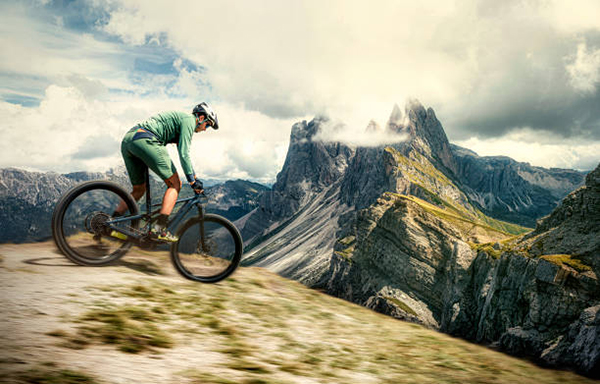
A vivid example of the troubled Self 1-2 relationship comes to my mind from my memories of the heart in-mouth experiences of watching my son compete in mountain bike racing. One of his high-school Mountain Biking competitions took us to Thredbo, Australia (think steep and fast downhill tracks). The students had completed their cross country trail, their blue (intermediate) down hill trail and were now onto the black-rated downhill trail. The competitors were pretty pumped, as the black trail was the fastest, most challenging, and from a parent’s perspective, the most dangerous. My son had not ridden many black runs before (well, not that he had told me about). After discussing the pros and cons, he decided that he was going to give the black-rated downhill trail a go. I was apprehensive but also proud that he was extending himself by challenging his fears.
Fast forward to the heats of the black run. I was standing near, but back from a series of tight banked fast corners before a big jump, leading to the finish line. From this position I was able to watch the riders burst out of the scrub at breakneck speeds before throwing themselves through these tight, fast corners. They were all pushing themselves to their limits to get the very best times they could. I was keen to see my son emerge out of the scrub but also keen that he didn’t hear or see me. A year earlier I had been photographing him taking a jump further down the same run and he knew I was there. He had been thinking about landing an impressive jump for the perfect Insta shot. No doubt as a result of trying extra hard, instead of the ideal Insta shot, instead he landed some impressive grazing and bruising after miscalculating the jump and crashing heavily.
It was for this reason, I waited silently in my camouflaged spectator spot to see my son appear from the scrub and complete the final part of the challenging black run. In stark contrast however, not far from me, was someone’s nanna, standing in prime position like a politician at a ribbon cutting right on the outside of the apex of a tight corner. Her hands were anxiously gesturing to the riders to slow down, and to each of the riders, in an imploring tone she voiced one simple word, (which in fairness to this nanna, was also being said in my head): “Careful!’.
Nanna’s potential to distract the riders horrified me but thankfully, none of the kids seemed to even register her hand flapping presence. However, had they been aware of her, I fear her actions and verbal warning would have been speaking directly to their Self-1 minds. Would they have suddenly been aware of all of the spectators and the photographers, and worried for a moment too long about how to pull off an awesome Insta shot, or would they have doubted that they knew how to take the next corner? Would they have started to wonder about their times and if they should push that little bit further outside of their comfort zone? When we are distracted by the imploring, anxious, and distrustful chatter of Self-1, we can tighten up, try too hard, and perhaps over think something we already know, rather than letting the next corner just happen.
So often in our lives, at home and at work, we get caught up in our minds, commentating on how we are performing, and anticipating how we may be judged by others. We doubt that we know what we are doing, that others will place their trust in us or that processes will work out. Getting caught in Self-1 leads to reduced confidence, distraction, worry, inadequacy or other feelings such as frustration. When we are in Self-1 rarely are we just in the moment of the current task, mostly we are re-hashing past difficulties or we are thinking ahead and imagining ourselves in future feared situations. Our Self-1 struggles to trust in our abilities and it won’t let the next corner just happen.
As leaders how often do we inadvertently engage with our team members’ Self-1, rather than their Self-2? Consider that,maybe with the best of intentions, while we think we are encouraging our teams to be ‘careful’ in their work, our approach triggers them to withdraw from the present moment and start evaluating themselves, their skills, their social standing within the team, the risk of being humiliated if they share an idea, or are they quietly quitting this job in their mind and already at their next company?
Alternatively, like me, spectating at the mountain bike racing, we can think that we are ‘all good’ because we are keeping our anxious thoughts to ourselves. However, we also know that our minds are not vaults. Rather our anxieties can leak out through our behaviour, our facial expressions, through the grammar of our speech and so often through what is not said or encouraged.
To engage with our Self-2 minds we need to create opportunities wherein we can lose ourselves into the flow of the present moment of our endeavours. We are seeking states of mind where, rather than being self conscious, we are self aware. In this state of self awareness we are in the moment and more adept at making assessments and reflections and taking effective action. Self-2 is at its best when it is trusted to know where to go next, to monitor and evaluate its current performance but without getting too focussed on all of the things which will make it crash. In mountain biking there is an adage, ‘your bike will follow your eyes’, meaning, look at where you need to be, not at what will make you crash.
Workplaces which are psychologically safe are optimised to produce an environment for staff to be more engaged in the challenges of the moment rather than being caught up in worrying about their careers, their self image or caught in resentments of past perceived injustices. As a leader, you can foster a psychologically safe workplace through: communicating and modelling the mission and values of your organisation, acting with transparency and honesty, setting clear and achievable goals for your team, and balancing challenge and empathy in your coaching.
Please reach out to Optimal Minds if you would like to develop your skills in being present in the current moment, to deepen your leadership skills or to improve the psychological safety of your organisation.
Read Our Latest Insights

‘What makes a good leader’ is a question most of us ask some time in our leadership journey. Most of us try to answer this question by looking at the leaders we come across in the workplace, in the news, those holding powers in government. I have asked this question personally and asked other leaders […]

I trained as a Psychologist and worked in clinical settings for the first five years of my professional journey. I really enjoyed helping young people and adults who experienced challenges with their mental health. One day, my manager called me into her office and offered me the opportunity to act in her role. It turned […]

Post pandemic life is more complex, more technical and more emotionally challenging. In our conversations with business leaders we often hear the refrain, ‘No one cares,’ and observations that the workforce is ‘disengaged’ and ‘burnt out’. Leaders experience their staff to be wary of workplace change which, in the wake of the pandemic, is necessary […]

In my role in health service management, I was surprised at how many new staff were reporting negative experiences in their past workplace. Every time I hear these stories, my mind gravitates to the famous quote: “People don’t leave bad jobs, they leave bad bosses.” Interestingly, the reasons for people leaving their jobs are more […]